Low Food Lab: The value of chestnuts on the plate and in the system
24 juli 2025

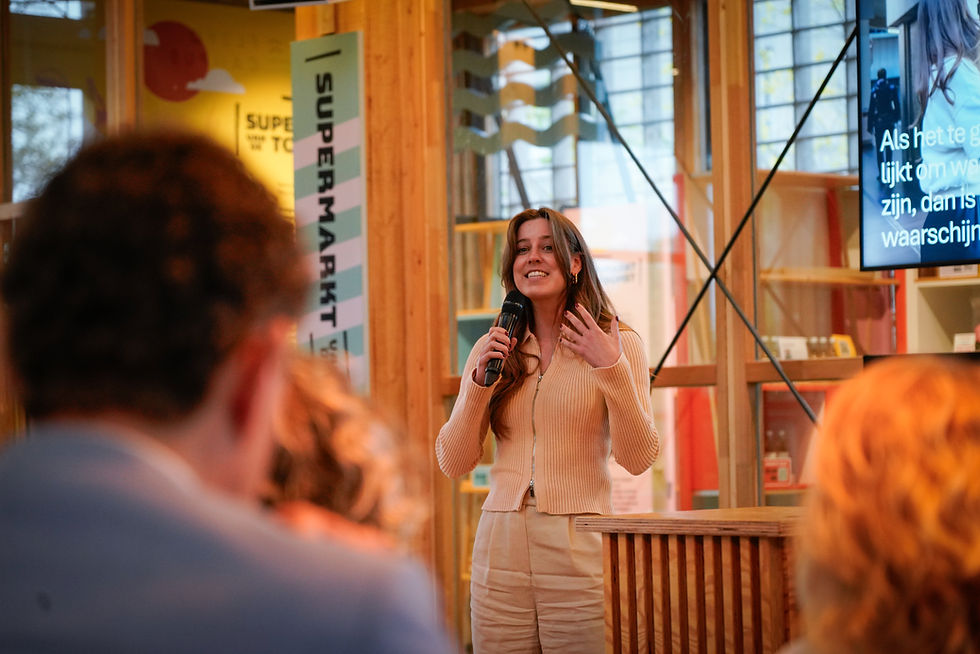
Last week, nine food professionals gathered in Amsterdam for the closing session of Low Food Lab: Chestnut. Over four months, they explored both the culinary and system-level potential of the European sweet chestnut, an ingredient that still receives relatively little attention in the Netherlands. During the lab, chestnut showed up in dough, kombucha, spreads, pastry, and even a frikandel.
A nutritious “nut” with real potential
Sweet chestnuts grow well in Dutch soils and have a lot to offer: nutritional value, flavor, and broad culinary versatility. In countries like Italy, Japan, and Switzerland, chestnuts are a familiar ingredient, but in the Netherlands they’re still less popular.
Interestingly, chestnuts aren’t a “nut” in the way most people think. They’re low in fat and relatively high in starch. That makes them more comparable to grains than to nuts, which opens up new possibilities in the kitchen.
Chestnuts also have system-level potential. Chestnut trees can support biodiversity, help restore soils, and fit into nature-inclusive growing systems. That’s why they appear on the longlist of promising crops in the upcoming WWF (WNF) Future Foods research.
Low Food Lab: experimenting with flavor and systems
Low Food Lab is a collaboration between Stichting Low Food, Food Pioneers, and Stichting SOL. Each lab centers on one ingredient. In this edition, participants developed ideas that could give chestnuts a new role in both kitchen and supply chain. That resulted in:
Chestnut-flour dosa with “chummus,” red cabbage, and pickled chestnut
Wild game frikandel made with venison and chestnut
Chestnut tempeh with an amazake reduction
Hazelnut-chestnut paste on a chestnut-flower cracker
A spread made with chestnut seed oil and chestnut vinegar on toast
Kombucha made from chestnut wood, shells, and leaves
Brioche with chestnut cream and a crunchy chestnut topping
A Japanese dessert with mochi, Mont Blanc, and marron glacé
A chair made from chestnut wood
Tasting the full range of creations highlighted just how versatile chestnut is. In the frikandel it worked as a binder, in the dosa as flour, and in other dishes as a subtle flavor layer or a source of body and texture. It was striking to see one ingredient play so many different roles while still bringing a recognizable soft taste and mouthfeel.
The Low Food Lab dishes
Chestnut as an anchor crop in regenerative systems
During the event, Flevo Campus researcher Jonah Koppe gave a presentation on the system value of chestnuts. Chestnut trees work well in agroforestry systems, where trees and food production reinforce each other. Think: tree rows in arable fields, grazing livestock between trees, planting along waterways, and multi-layer food forests.
Food forests can store carbon, restore soils, and deliver crop diversity. But they also come with challenges: a long time to maturity, high start-up costs, and a lack of proven business models. These systems often need anchor crops that offer both ecological and economic value, and chestnut is a strong candidate.
From overlooked ingredient to future-facing staple
Chestnuts may bring to mind fall walks and open fires, but they deserve a broader view. They’re a familiar ingredient that fits a regenerative food culture: locally grown, nutritious, plant-based, and surprisingly versatile.
What this edition of Low Food Lab made especially clear is that flavor can lead to bigger questions, about origin, impact, and the ways our food is connected to landscape and society.
Want to join a future lab?
Are you a chef, researcher, or food maker working on the future of food? Keep an eye on Food Pioneers' channels for the next open call for Low Food Lab.
About Low Food Labs

Low Food Labs bring together food producers and developers, scientists, chefs, and other culinary creatives to tackle current food challenges in Flevoland and beyond. The project is a collaboration between Food Pioneers and Low Food, an organization working to put Dutch food culture on the map.