MAP toolbox shows how mbo students can make plant-based choices more appealing

Different target groups have different motivations for eating more plant-based food. For some, sustainability is the deciding factor, while others are driven mainly by practical considerations. Within MAP, Mbo-student in Actie voor Plantaardig voedsel, vocational (mbo) and university of applied sciences (hbo) students worked with researchers, lecturers and industry partners to explore how plant-based choices can better fit into the everyday lives of mbo students. The research looked at their environment, what they like and dislike, and factors such as affordability.
Practical solutions
One key insight from MAP is that many mbo students are quite open to plant-based choices, as long as these do not feel like a major change and fit practically into their existing routines.
A familiar dish with a plant-based twist, an affordable option in the school canteen or an easy recipe students can make themselves is more likely to work than a message focused on sustainability. Many mbo students do not have ideological objections to plant-based food. The barriers are more practical. Food choices are often made in the moment: something tasty and quick, preferably easy and affordable. The social environment also plays a role.
Challenges that let students design their own solutions
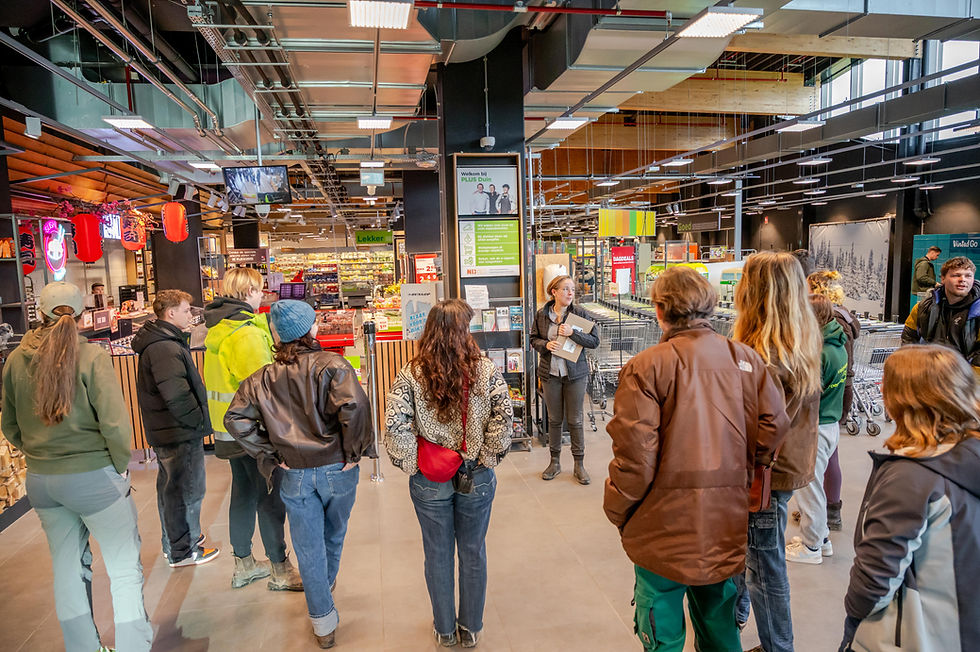
A strong part of MAP was the use of mbo challenges. During these challenges, students explored how plant-based food could better appeal to their own target group. This meant that students were both the subject of the research and actively involved in designing solutions. They researched, developed, created and tested ideas that fit their own everyday lives.
This led to recipe ideas, canteen concepts, social media campaigns and accessible food concepts. Examples include familiar dishes with more plant-based ingredients, appealing options in school canteens and concepts that combine plant-based food with convenience and experience.
These are interesting insights when it comes to behaviour change. When students are actively involved in developing ideas, the resulting solutions are more closely connected to everyday reality.
Food Impactmakers

Food Pioneers was involved in MAP as a co-partner and supports the sharing of the knowledge gained through the project. The challenge-based approach fits particularly well with how we work in programmes such as Food Impactmakers.
In Food Impactmakers, mbo students also work on current food-related challenges themselves. This allows them to discover how their own ideas can contribute to change in practice.
Explore the MAP toolbox
The results from MAP have been brought together in a digital toolbox. It contains challenges, insights and ideas that teachers, policymakers, caterers, students and food professionals can use to make plant-based choices more accessible and appealing in and around mbo education.
Explore the MAP toolbox (published in Dutch):
Learn more about Food Impactmakers here.
Want to take on a food challenge too?
Curious about how Food Pioneers can involve students, employees or other target groups in a current food-related challenge? We develop programmes and challenges in which participants research, design and work on practical solutions themselves.
Contact Anneleid Linthorst at anneleid@foodpioneers.nl or +31 6 51 98 79 79 to discuss the possibilities.